
At Foundations for a Low-Carbon Future — an event we were proud to sponsor — architects, engineers, planners and researchers came together to explore a key question: how can the built environment take the lead in achieving net zero?
The discussions revealed a clear consensus. Reducing carbon in construction demands a shift in how we design, specify materials and measure success.
Policy innovation; embedding awareness in planning.
In the absence of national regulation on embodied carbon, local authorities are stepping up. South Hams’ approach requires applicants to measure and report the emissions impact of construction materials and design choices, encouraging lower-carbon methods and more efficient energy use.
Phil’s team is proving that local policy can drive innovation, even in complex regulatory environments. His message was pragmatic: decisions on carbon need to be made with the same confidence as decisions on design, scale and layout.
Design-led carbon reduction
Alfred Millan of AtkinsRéalis discussed how design-led carbon management can transform the development process. As the UK’s energy grid decarbonises, embodied carbon — the emissions associated with materials and construction — becomes the dominant factor in a building’s total impact.
Alfred presented an integrated approach where carbon is considered from the earliest design stages, evolving alongside cost and performance data. This approach turns carbon assessment into a design tool rather than a compliance exercise.
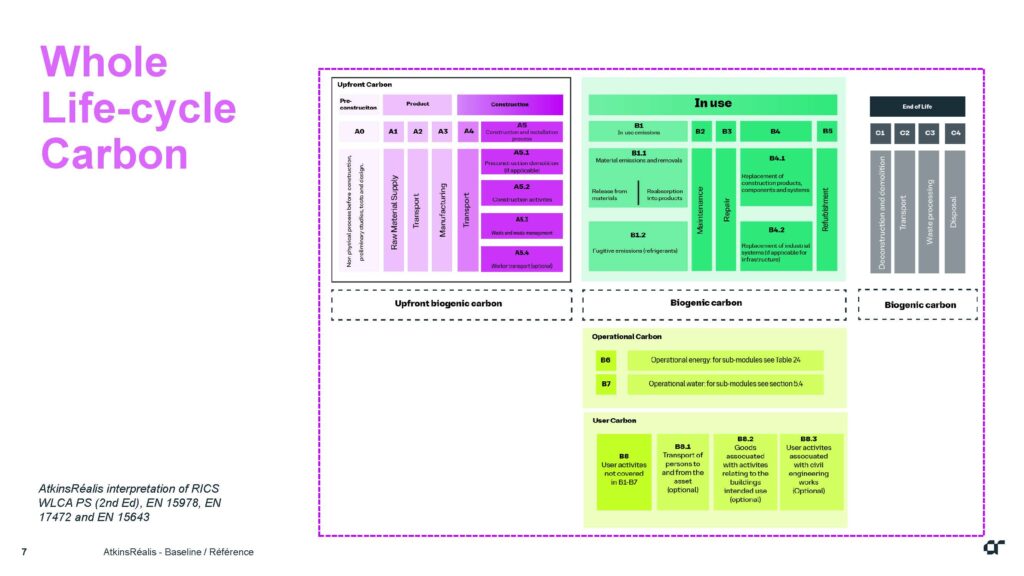
He then explored work by his colleague, Olliva on Sustainable Materiality — a framework for selecting materials that balance low embodied carbon with health, durability and circularity.
Azolla Sustainability Tool was showcased, which helps teams measure and manage these wider impacts.
The material transition.
Neil Appleton from Innovate UK Business Connect introduced ESBEM – Emergent Sustainable Built Environment Materials, a programme supporting the uptake of low-carbon construction materials. He outlined the challenges: fragmented supply chains, slow certification processes and limited testing capacity.
His message was optimistic — the technologies exist, but industry collaboration is key to scaling them.
Matthew Fox from the University of Plymouth presented the CobBauge project, which updates traditional cob construction with a new dual-layer mix that meets modern thermal standards. The work shows how heritage techniques can adapt to meet future performance requirements.
Dr Raffaele Vinai from the University of Exeter focused on concrete, describing it as “the unexpected offender”. His research demonstrates how waste-derived binders and alternative cements can significantly reduce emissions from one of construction’s most carbon-intensive materials.
Chris Brookman, founder of Back to Earth, brought the discussion firmly back to materials — and to the opportunities right in front of us. He spoke about the growing maturity of the bio-based materials market and how products such as wood fibre insulation, clay plasters, and lime renders are already delivering high-performance, low-carbon results in UK projects.
Chris then emphasised that the challenge isn’t a lack of technology, but a lack of familiarity and confidence. By combining timber structures with natural insulation and finishes, he argued, the industry can achieve exceptional performance and carbon savings while using materials that are healthy, local, and recyclable. His perspective reinforced the idea that sustainable construction doesn’t require radical invention — it requires scaling what already works.
Together, these presentations made a strong case for material diversity — timber, earth, stone and hybrid systems all contributing to a lower-carbon built environment.
Architects and engineers leading on design.
Rob Hankey, Director at Barefoot Architects, spoke about the practical realities of low-carbon building. His practice focuses on materials with minimal environmental impact — such as chalk, hempcrete and reclaimed masonry — and sources as much as possible locally. His approach shows that sustainability is achieved through attention to detail and early integration of environmental principles, not through grand gestures.
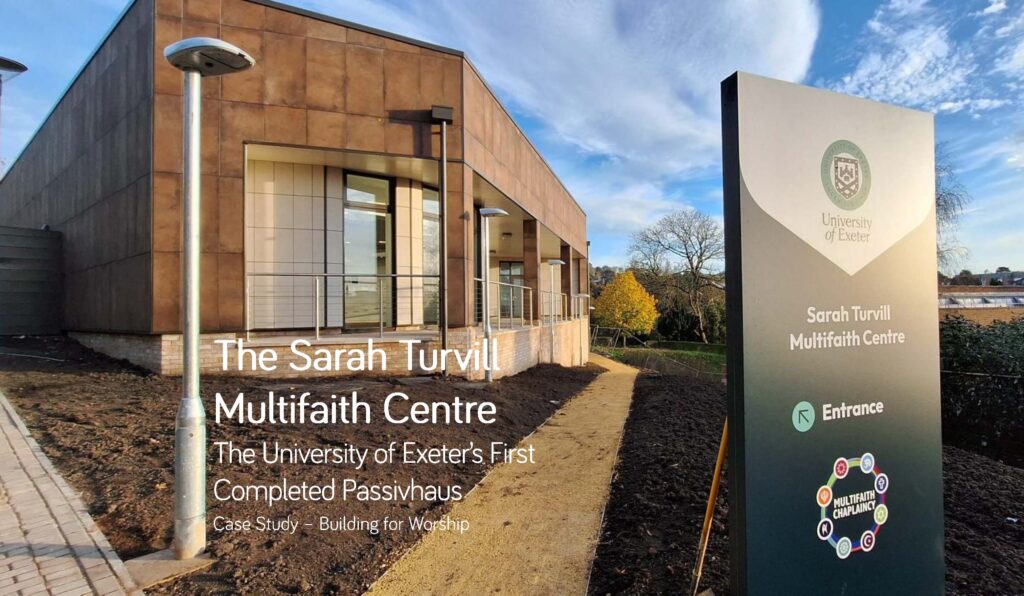
Tomas Gaertner of SE3 Design presented the University of Exeter’s new Multifaith Centre, the institution’s first Passivhaus building. Using breathable, permeable materials such as porous clay blocks, the project balances energy efficiency with indoor comfort and low embodied carbon. Read more about this fantastic project here.
Structural engineer Scott Boote, Director at Agnos Studio, closed this technical session with a focus on early-stage decision-making. With up to 80 percent of a building’s embodied carbon tied to its structure, choices about spans, grids and materials have the greatest impact. His advice was simple: build less, build efficiently and focus effort where it matters most.
Extending sustainability beyond the building.
Key takeaways.
Across the event, several clear themes emerged:
– Carbon performance must be considered from the start of every project.
– Measuring whole-life carbon is essential to understanding true impact.
– Collaboration across planning, design and research is vital.
– A wider palette of materials — timber, stone, earth and reused resources — will define the next generation of low-carbon buildings.
The event captured a moment of transition in the industry. Moving towards net zero requires practical innovation, cross-discipline collaboration and a willingness to challenge established norms. The work shared throughout the day shows that the solutions are already here — it’s now a question of scaling them up.
Timber frame construction sits at the centre of this conversation. As one of the few truly renewable structural systems, it offers an immediate and scalable route to lower embodied carbon without compromising performance or design freedom. Engineered timber systems combine precision manufacturing with design flexibility, making them ideally suited to the whole-life carbon approach discussed throughout the event.
The relevance of timber is not just environmental — it represents a shift towards smarter, faster, and more responsible ways of building. As the industry works to translate research and policy into real projects, timber frame stands out as one of the most practical pathways to delivering the low-carbon future we all talked about.
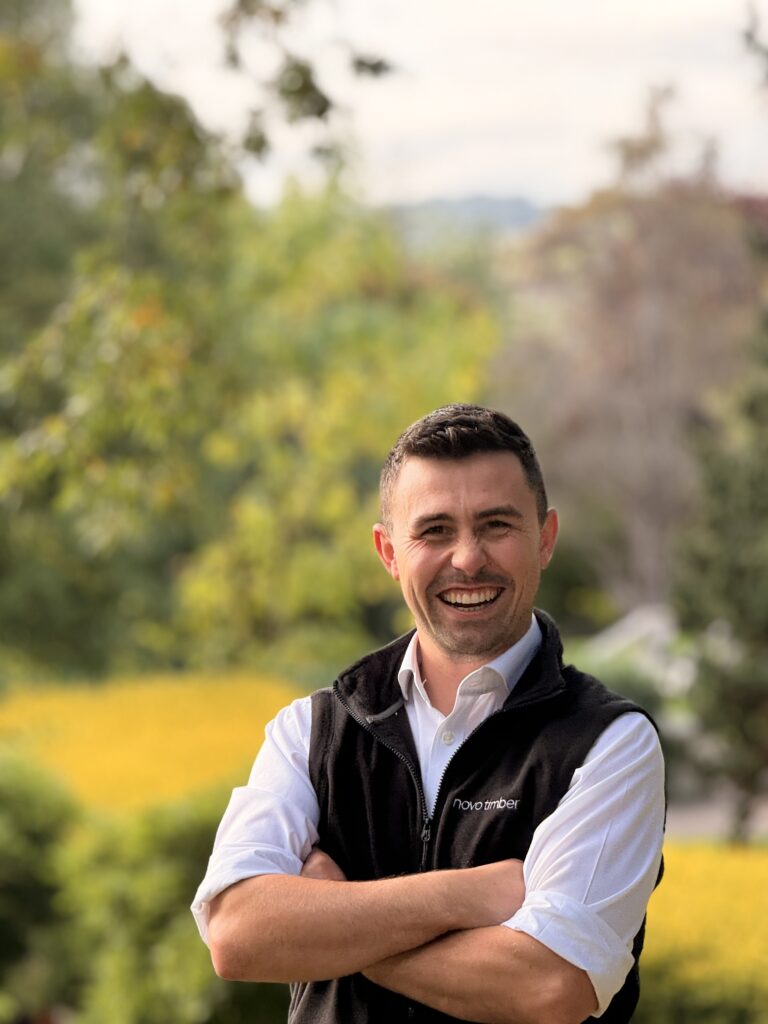

It was fantastic to attend this innovative, informative and excellently attended event. Listening to so many passionate experts reinforced what we already know — change is happening fast, and timber is right at the heart of it. It’s a material that connects innovation, performance, and responsibility in a way few others can.
Simon Dickinson - Sales Manager @ Novo Timber Tweet