
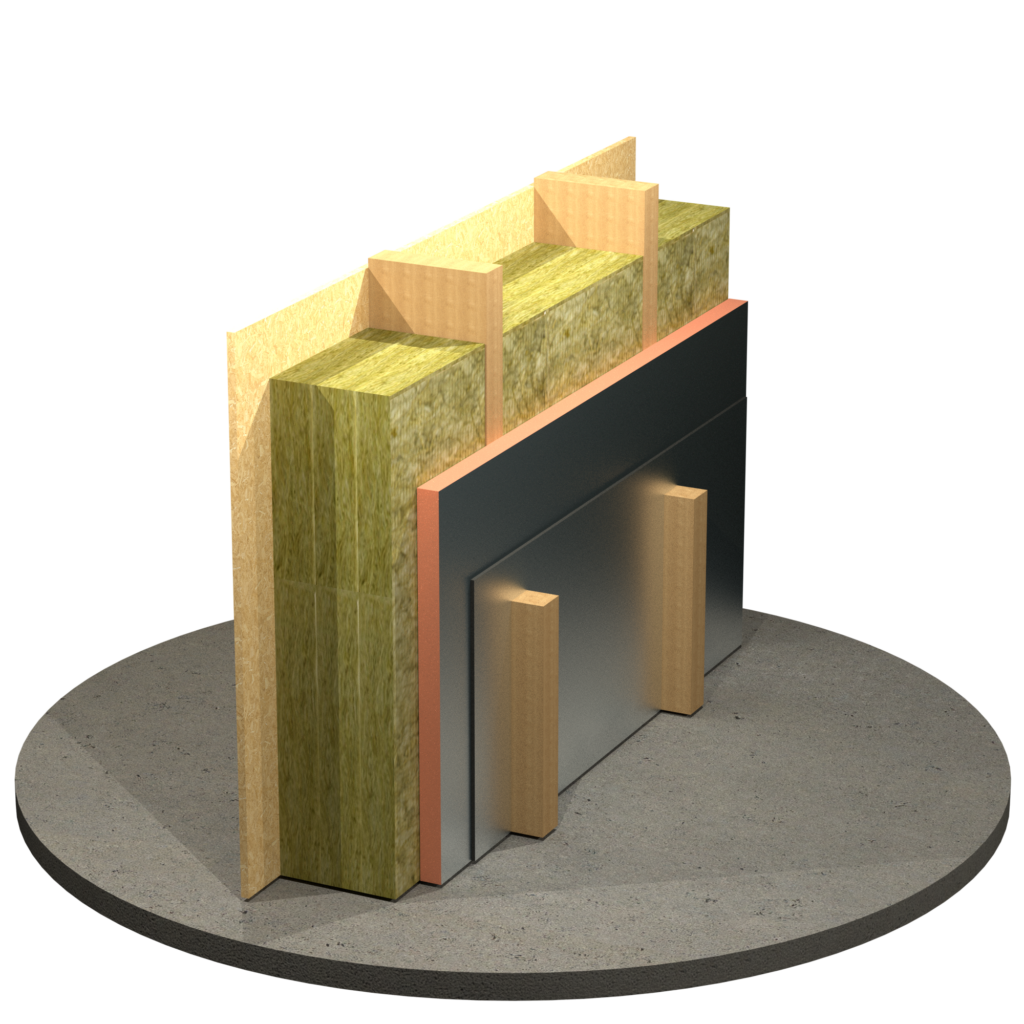
What is the Future Homes Standard?
The Future Homes Standard (FHS) is the UK Government’s upcoming regulation aimed at ensuring all new homes produce significantly lower carbon emissions and are “zero carbon ready” from the point of completion.
Expected to be fully implemented in 2027, the standard builds on the interim uplift to Part L (2021) and represents a step-change in how homes are designed and constructed.
In practical terms, it means:
- A 75–80% reduction in operational carbon emissions compared to current housing stock
- A shift away from fossil fuel heating systems (e.g. gas boilers)
- A strong emphasis on fabric performance, airtightness, and energy efficiency
- Homes that won’t require retrofit to meet future net zero targets
This is not just needless regulation that will get washed out. It fundamentally changes how buildings need to perform.
The Future Homes & Building Standards Timeline:
March 2026
Where We Are Now:
Current projects are still being delivered under the 2021 uplift to Part L.
However, this does not mean the industry can afford to wait. Many designers and developers are already working toward the 2027 standards, particularly on projects that will not start on site for some time.
March 2026 - March 2027
The transition begins (in practice).
Although the regulations do not formally change until 2027, 2026 is effectively the turning point.
Projects in planning or early design stages now are highly likely to fall under the new standards by the time they reach construction. As a result, many teams are already:
- Designing around low carbon heating systems
- Considering solar integration from the outset
- Improving fabric performance and airtightness
Waiting until the regulations formally change risks redesign, delay, and additional cost.
March 2027
New regulations come into force.
The Future Homes and Buildings Standard becomes mandatory.
From this point:
- New homes must be designed with low carbon heating
- Renewable electricity generation (such as solar PV) becomes a standard requirement
- Higher levels of energy efficiency are expected as baseline
2027 - 2028
Transitional Period
A limited transition period will apply. Projects may still be delivered under previous regulations only if:
- Plans were submitted before 24 March 2027
- Construction begins before 24 March 2028
This is not a long-term workaround. It is intended to allow projects already in progress to complete under the previous standards.
March 2028 onwards...
Transition ends.
The transition ends.
All new projects must comply fully with the Future Homes Standard, with no route back to previous regulations.
Why the Future Homes Standard changes everything...
The Future Homes Standard is not just about adding technology. It forces a shift toward performance-led construction.
Fabric Performance Comes First
Under the Future Homes Standard, the building envelope must do the majority of the work.
That means:
- Lower U-Values across walls, roofs and floors.
- Reduced thermal bridging.
- Consistent insulation installation.
- High quality build standards.
This means if the fabric fails, the building does not comply. Much more emphasis is placed on on-site performance, opposed to pre-start calculations and specification.
Airtightness Becomes Critical
The Future Homes Standard places significant emphasis on airtightness.
- A Continuous, well-defined air barrier.
- Careful junction detailing.
- Reduced reliance on on-site guesswork.
Traditional construction methods often struggle here due to variability between trades.
Low Carbon Systems Depend on the Fabric
The Future Home Standard assumes use of systems such as:
- Mechanical Ventilation with Heat Recovery (MVHR)
- Air Source Heat Pumps (ASHP)
These systems only perform effectively when paired with a high-performing building envelope. The envelope is key. Read more about our MVHR Packages here.
How does
Timber Frame
support the Future Homes Standard?
Timber Frame as a Modern Method of Construction does not automatically comply with the FHS just by chance. However, by the very nature of it’s front loaded process and focus on pre-construction detailing, coordination and certification, it provides the consistency which is soon to be demanded by the FHS.
Precision and Consistency.
Timber frame systems are manufactured off-site in controlled conditions.
This results in:
– Accurate panel construction.
– Consistent insulation placement.
– Reduced site variability.
For the Future Homes Standard, this consistency is not optional. It is essential.
Airtightness, by design.
Timber frame allows for a clear and continuous airtightness strategy.
This includes integrated AVCL layers, simpler junction detailing, greater control over critical air leakage paths.
Compared to traditional masonry, airtightness is achieved through system design, not site correction.
Fabric First Approach.
The Future Homes Standard demands a fabric-first approach. Timber frame naturally supports this through:
– Deeper structural zones for insulation
– Compatibility with high-performance insulation systems
– Straightforward integration of service voids
Achieving target U-values becomes more predictable.
Reducing Thermal Bridging.
Timber frame construction simplifies junctions and allows for more continuous insulation layers, fewer repeat thermal weak points and a better overall thermal performance
This is critical for meeting the modelling requirements of the Future Homes Standard.
Programme Certainty
As compliance requirements increase, so does the need for certainty.
Timber frame provides:
- Faster route to weathertight
- Reduced programme risk
- Better coordination between trades
This is not just a build advantage. It reduces compliance risk.
A quick reality check...
We don’t believe in ‘fluff’ and it’s worth being direct. Especially when it comes to new regulations.
Timber frame will not automatically deliver Future Homes Standard compliance.
Failure typically comes from poor or incomplete design coordination, a lack of a clearly defined airtightness strategy, weak detailing at junctions and interfaces, treating timber frame as a commodity rather than a system
The Future Homes Standard will expose poor execution quickly.
What it means for your project...
for Developers.
The Future Homes Standard increases risk where performance is not properly achieved. Compliance is no longer forgiving, and any gap between design intent and site execution can quickly become a commercial issue. Timber frame offers a more controlled route, providing greater predictability, reducing the likelihood of rework, and improving confidence that compliance targets will be met first time.
for Self Builders.
The Future Homes Standard raises expectations around energy performance and long-term efficiency. For self-builders, this can introduce uncertainty around how to achieve compliance without overcomplicating the build. Timber frame offers a more straightforward path, delivering energy-efficient homes with lower running costs and greater confidence that the finished building will perform as intended.
for Architects.
The Future Homes Standard places greater emphasis on buildable, performance-led detailing. Designs must translate cleanly into construction, with clear strategies for airtightness, insulation continuity, and junction resolution. Timber frame supports this by enabling a more integrated design approach, where performance is considered from the outset rather than resolved on site.
Where projects will fail under the FHS...
The Future Homes Standard does not fail on paper. It fails in delivery.
Performance gaps rarely come from individual elements like walls or roofs. They happen at junctions and interfaces, where continuity is harder to maintain and responsibility is less clear.
Airtightness is a good example. It is not a single layer within a wall, it is a continuous system that must run unbroken through the entire building. Most failures occur where that line is interrupted:
• Floor-to-wall junctions
• Roof interfaces
• Window installations
• Service penetrations
If continuity is lost at any point, overall performance drops.
Late-stage changes make this worse. Small adjustments on site can:
• Break the airtightness line
• Misalign insulation
• Introduce thermal bridging
These issues are rarely obvious until testing, when they become costly to fix.
There is also the challenge of fragmented delivery. Traditional construction relies on multiple trades, each responsible for a piece of the build-up:
• No single party owns the full envelope performance
• Critical interfaces fall between scopes
• Responsibility becomes diluted
The Future Homes Standard reduces tolerance for these gaps. Buildings need to perform as designed, not approximately.
This is why a more controlled, system-led approach is becoming essential.
Conclusion...
The Future Homes Standard is not about incremental improvement. It is a shift toward measurable, proven building performance.
To meet it, construction must become:
- More Controlled
- More Consistent
- More System-Led
Timber frame aligns with these requirements when it is properly designed, detailed, and delivered. Not because it is fashionable, but because it is structurally better suited to achieving the outcomes the Future Homes Standard demands.
The Future Homes Standard rewards performance, not intent.
If your construction method relies on variable site execution, you are increasing risk.
If your approach is system-led, coordinated, and precise, you are aligned with where regulation is going.